What We Encountered in the Focus Groups: Listening to Youth
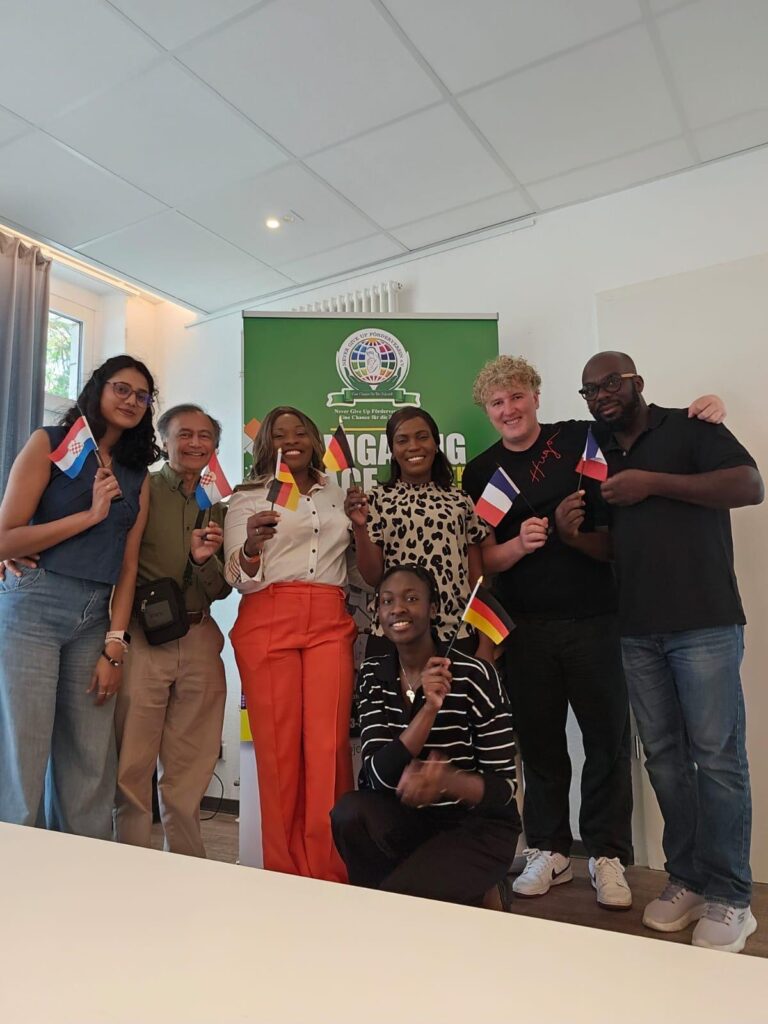
As part of the HarmonyPath project, national focus groups were conducted in Germany, Croatia, and France with young people and youth workers. These discussions played a crucial role in shaping the Digital Adventures, Coaching Cards, and overall peacebuilding framework.
Rather than focusing on extreme or isolated incidents of violence, participants across all countries consistently highlighted a different reality: violence and harm are most often experienced as subtle, repeated, and emotionally draining moments embedded in everyday life.
What emerged was not a single story, but a set of interconnected insights shaped by national contexts, social environments, and cultural norms.
In the German focus groups, digital communication was described as central to young people’s social lives. Conflict rarely appeared as overt aggression. Instead, it took the form of constant background noise: repeated jokes, sarcasm, exclusion through silence, and normalized hostile language in online spaces.
Young learners emphasized that:
Harm online is cumulative rather than episodic,
Silence often feels safer than speaking up,
Social isolation is a stronger fear than formal punishment.
Youth workers echoed these concerns, highlighting that subtle harm is harder to address institutionally than visible incidents. They expressed uncertainty about when and how to intervene, especially when behavior does not clearly cross formal “rules.”
A key message from Germany was the need for language that does not shame. Both youth and facilitators rejected moralizing labels and preferred approaches that focus on impact rather than intent, curiosity rather than accusation.
The Croatian focus groups reflected a different social reality. Many participants live in small or closely connected communities, where school, family, and social life overlap heavily. In these settings, conflict is rarely anonymous and often carries long-term social consequences.
Young people described silence not as indifference, but as a survival strategy:
Speaking up can damage reputation for years,
Being seen as “problematic” carries lasting consequences,
Humor is often used to mask discomfort or harm.
Youth workers described navigating multiple roles at once: facilitator, mediator, community member, and sometimes informal authority figure. This complexity limits how directly they can intervene.
The French focus groups highlighted a context of high civic expression and visibility. Young people are encouraged to have opinions, engage in debate, and take public positions—but often without adequate support for dialogue, listening, or emotional processing.
Young learners described conflict as:
Loud, fast, and public,
Difficult to slow down once visible,
Driven by urgency and performative positioning.
Many felt pressure to respond immediately and feared that mistakes would not be forgiven once made publicly. Youth workers noted that while expression is encouraged, skills for handling disagreement are underdeveloped.
Across all three countries, several cross-cutting lessons emerged:
Most harm is subtle, repeated, and normalized, not dramatic.
Silence plays multiple roles: protection, fear, and sometimes complicity.
Youth want tools that support reflection, not control.
Emotional safety is a practical necessity, not an abstract principle.
Peacebuilding often happens quietly—through restraint, repair, and consistency.
Recevez des mises à jour et restez connecté - Abonnez-vous à notre lettre d'information

SENTIER D'HARMONIE
Financé par l'Union européenne. Les points de vue et opinions exprimés n'engagent que leurs auteurs et ne reflètent pas nécessairement ceux de l'Union européenne ou de l'Agence exécutive européenne pour l'éducation et la culture (EACEA). Ni l'Union européenne ni l'EACEA ne peuvent en être tenues pour responsables.
- Page Facebook
- mail : admin@harmonypath.eu